September 15, 2025
"But We Live in an Apartment" — How to Bring Joseon Furniture Home
There is one sentence we hear more than any other: "I love it, but… we live in an apartment." Behind it sits a stubborn assumption that Joseon furniture only belongs in a hanok. Yet measure the rooms this furniture actually grew up in and the story changes. A main room in a Joseon house was one kan — roughly seven to ten square meters — with a ceiling around 2.2 meters. Sound familiar? Yes: an apartment. Joseon furniture has been a small-floor-plan specialist since birth.
Built for floor-sitting life under low ceilings, every piece is low — and low furniture lowers the eye line, making the same square meters feel larger. The principle mid-century designers rediscovered as "low furniture" was second nature to Joseon cabinetmakers centuries earlier. So this guide is less persuasion than myth-busting: bringing Joseon furniture into an apartment is easier than you think, suits the space better than you think, and comes with no assembly manual. There is nothing to assemble.
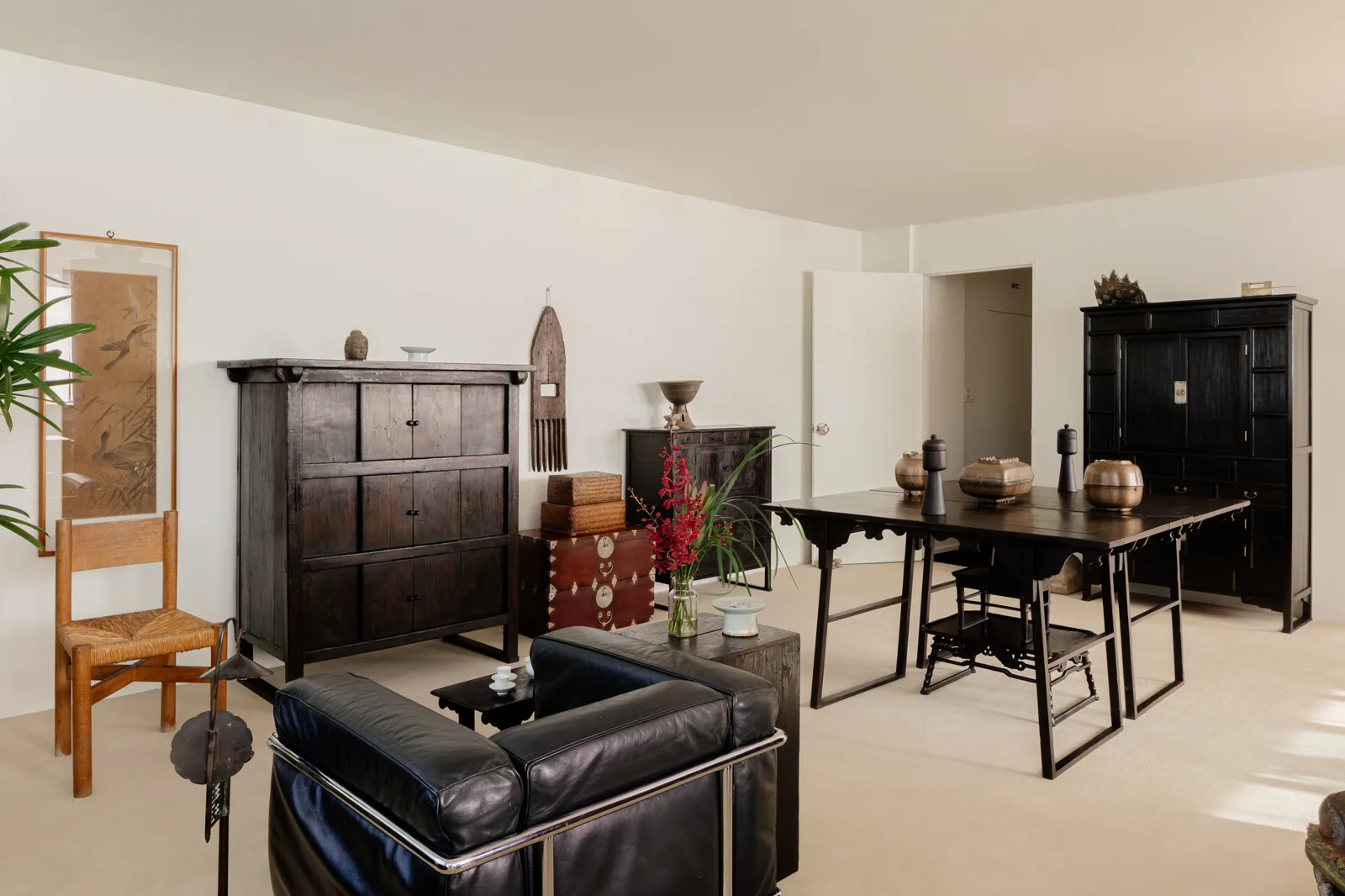
A Joseon cabinet beside a black leather sofa — GOBOKII
1. The Bandaji — a Second Career Under the TV
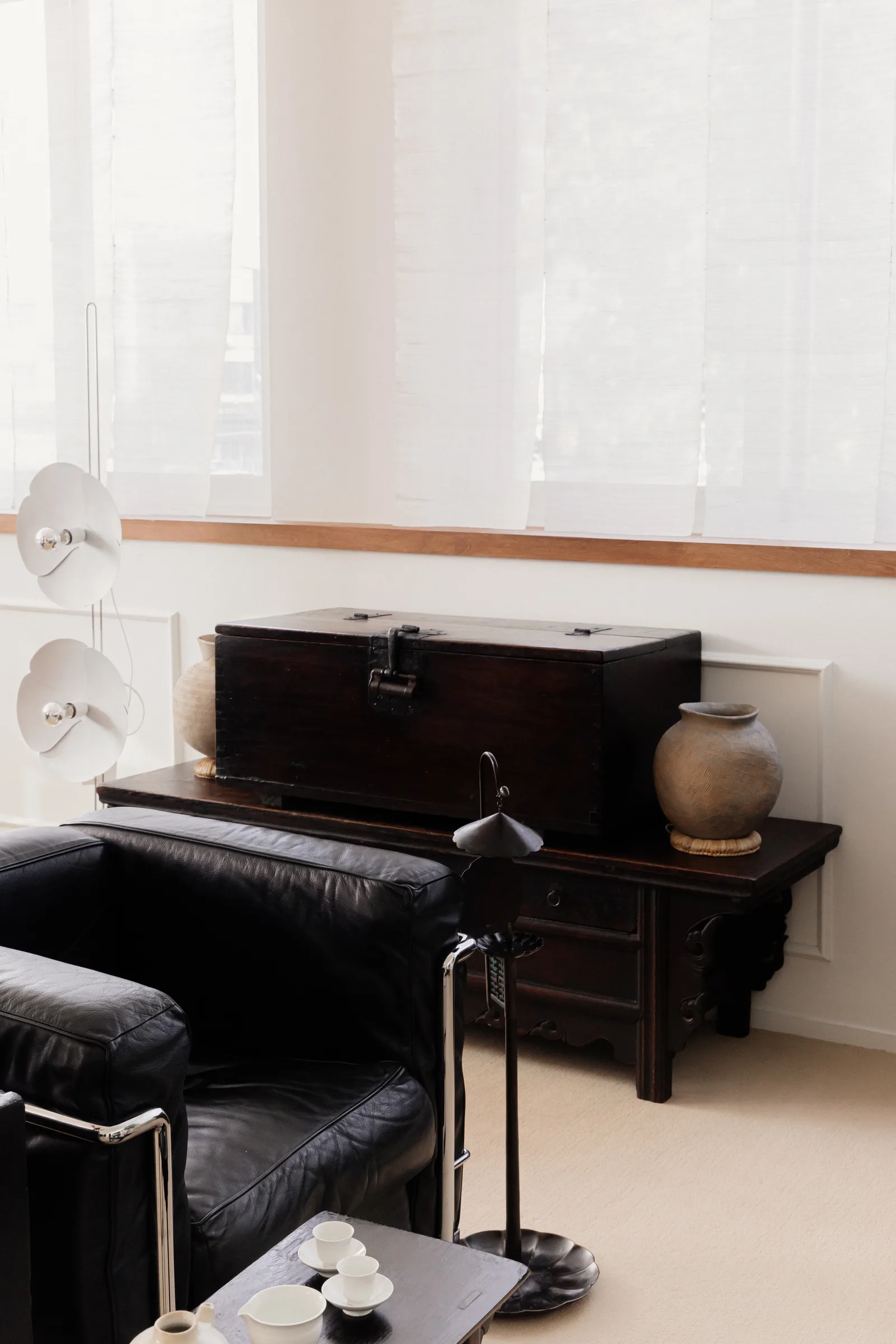
A bandaji chest beside the sofa — GOBOKII
The spot where Joseon furniture lands most often, and most successfully, in an apartment is — unexpectedly — under the television. The bandaji, a chest whose front panel folds halfway down, once stored clothes and documents, and its width and height happen to match a modern media console almost exactly. Put one under a wall-mounted TV and the living room changes that day. Remotes, routers, game consoles — the clutter of the twenty-first century goes inside, and the door closes. A chest that guarded valuables for a century finds a router very light work.
There is a reason this pairing spread. The bandaji's front — heavy wood plane, iron fittings — is an abstract painting in itself, and it balances the black rectangle of a switched-off screen surprisingly well. Since it became known that RM of BTS treasures bandaji, a younger generation has joined the hunt. When choosing, check the metal fittings, the hinge action, and the smell inside. And remember the seating chart: the bandaji is considerably the TV's senior, so it naturally takes the seat of honor.
2. The Sabang-takja — the Original Open Shelving
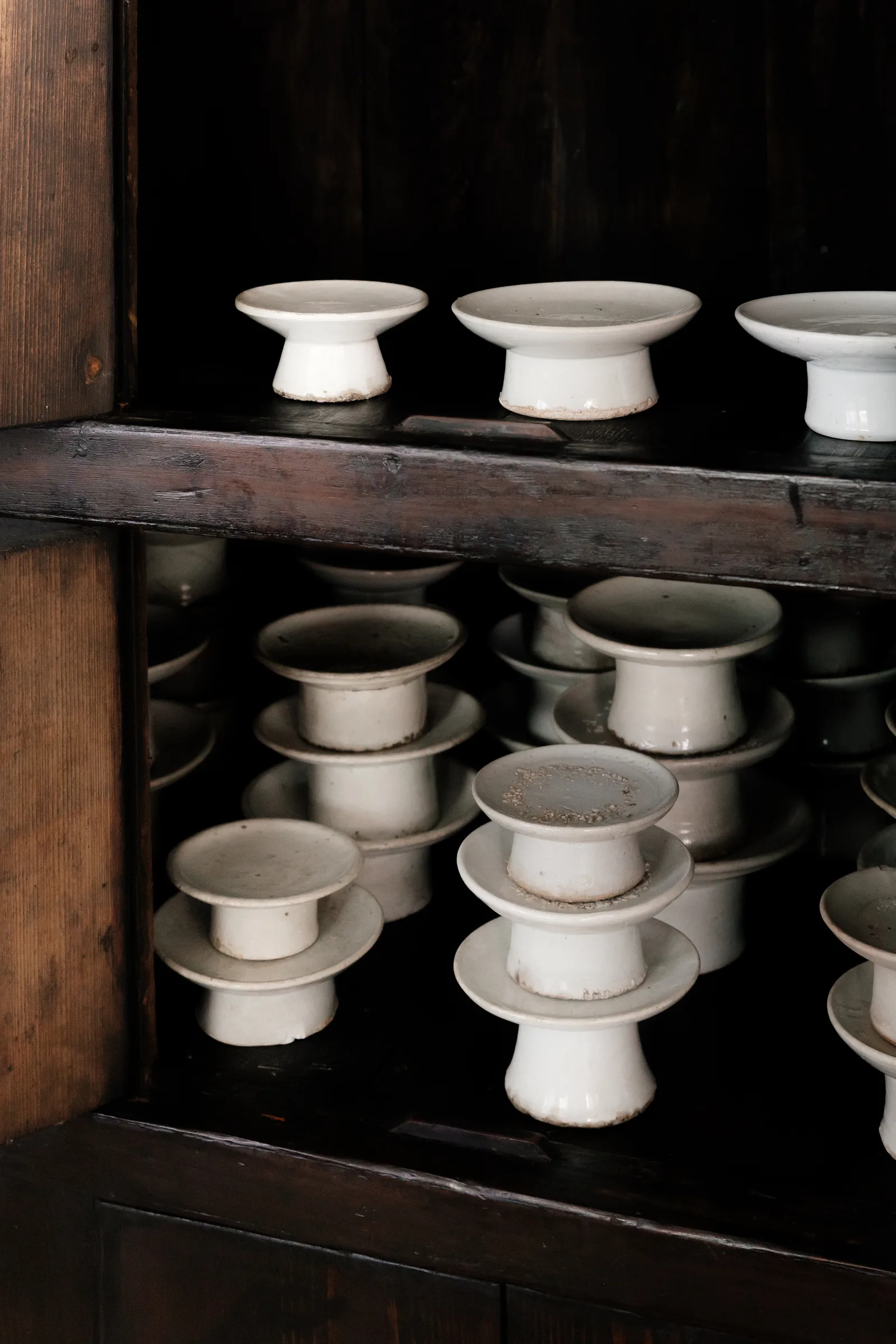
White porcelain ritual vessels stacked in a shelf cabinet — GOBOKII
The sabang-takja — a tall shelf open on all four sides — is, in today's terms, open shelving. With one decisive difference: modern shelves are furniture for filling, while the sabang-takja is furniture for emptying. Cram every level and the magic dies; place one thing per level — a white porcelain jar, a few books, a small plant — and a private exhibition room appears in your home.
Real-world uses vary: beside the sofa with a speaker below, books in the middle, porcelain on top; in the bedroom as nightstand-plus-shelf; in the kitchen stacked with teapot and cups as a home-café station. Framed from slender members, it carries almost no visual weight for its volume — which means the smaller the home, the greater its advantage. Where a bookcase cannot go, a sabang-takja goes; and rather than blocking the space, it stands it upright.
3. Soban and Mungap — Utility Players for Small Homes
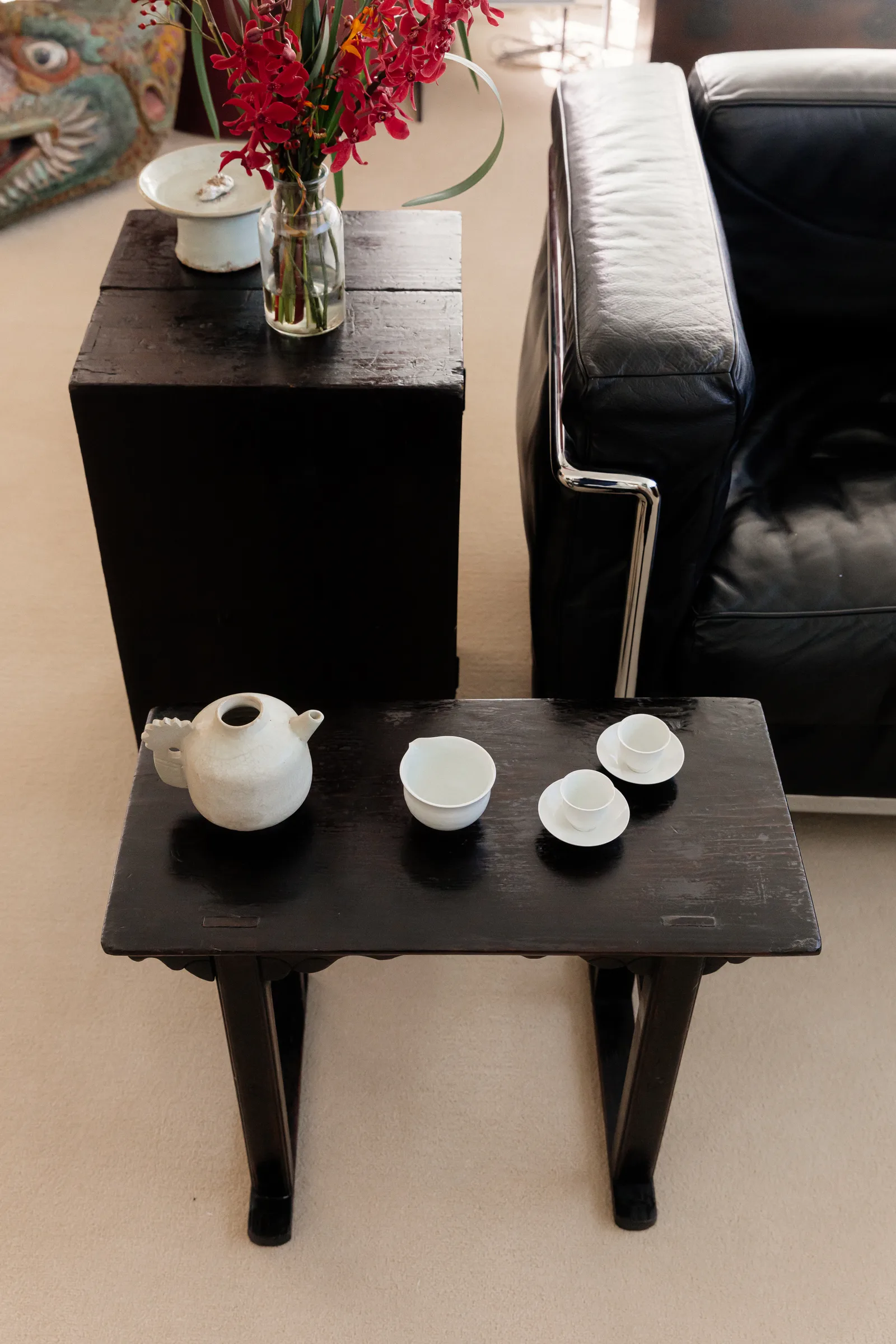
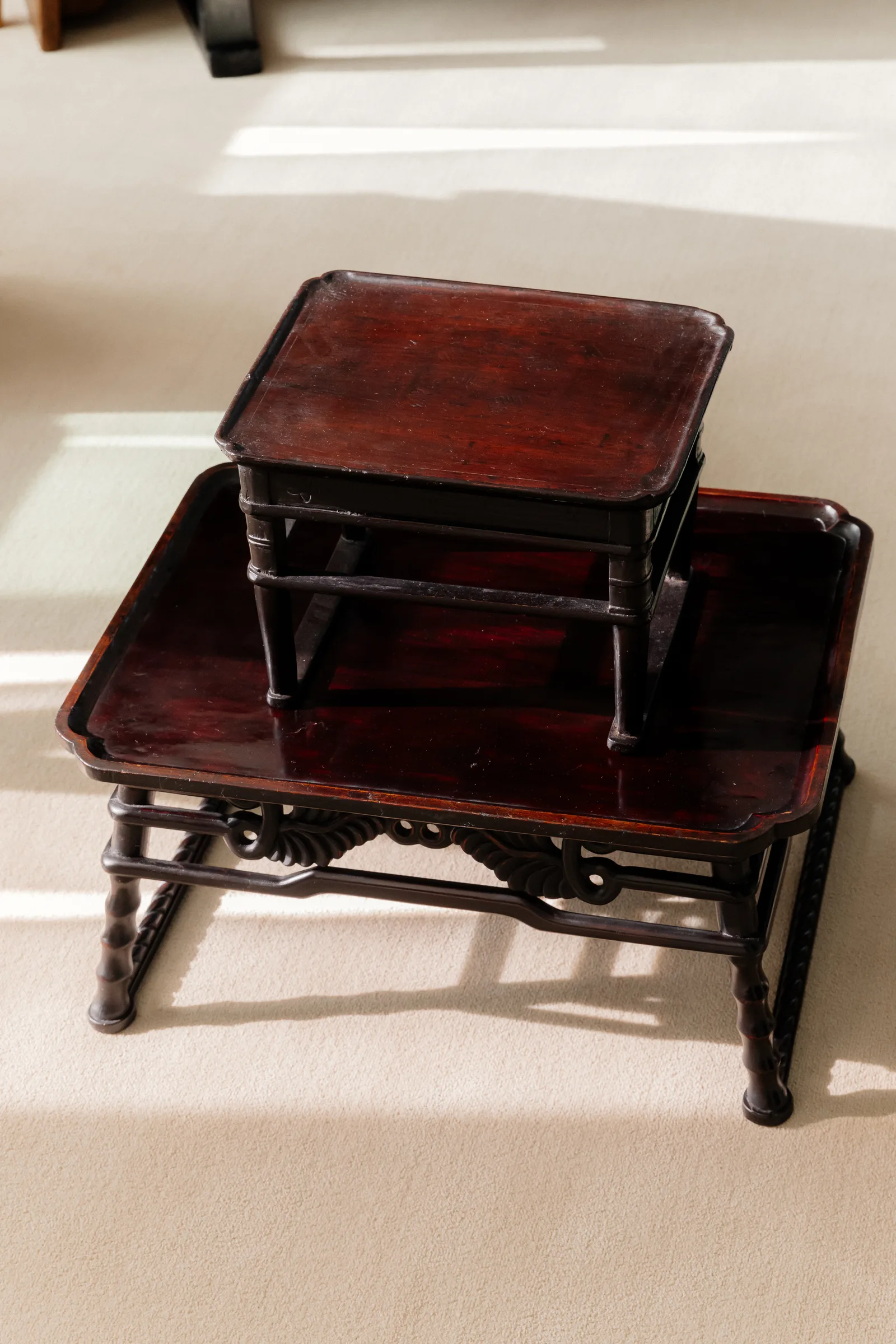
A soban as tea table; red-lacquered soban stacked in use — GOBOKII
We covered the soban at length in a previous guide, so here is only the apartment postscript: bedside table, sofa side table, the key-drop spot by the door — the soban fits every in-between corner an apartment has. How many pieces of furniture can be leaned against a wall when not in use? It isn't even foldable. It's just considerate.
The mungap, a long low storage chest, shines in the entryway as a console, under a bedroom vanity, or beneath a window — that last position being exactly how Joseon scholars used it, so you are borrowing an interior formula several centuries old. On top: one folk painting, or one piece of white porcelain. The combination fails so rarely that we privately call it the cheat code.
4. The Medicine Chest — an Organizing Genius with Twenty Drawers
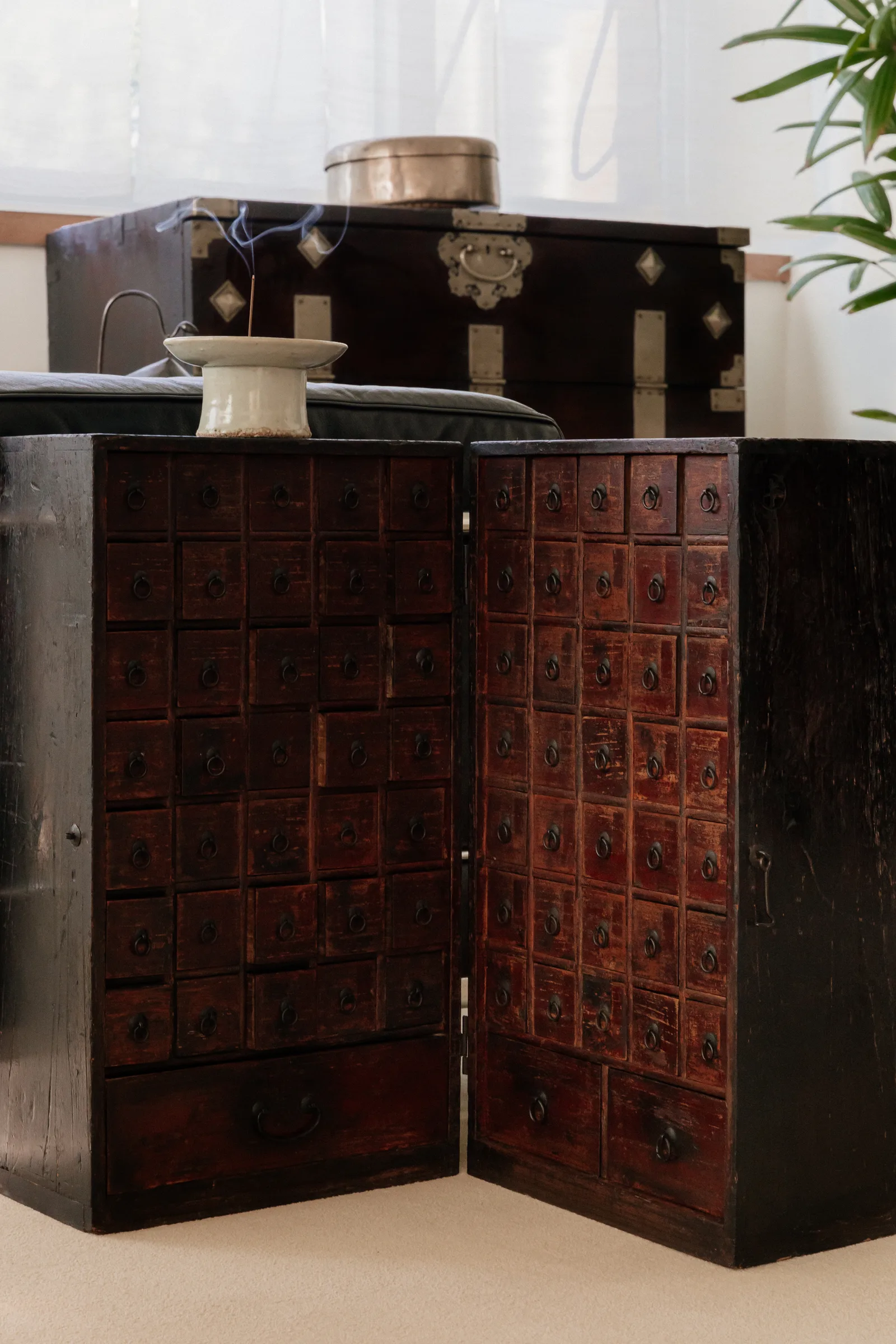
A medicine chest standing in the living room — GOBOKII
The yakjang, built to sort medicinal herbs, is a chest of dozens of small drawers. Almost nobody uses it for herbs anymore, but many drawers are a timeless virtue: stationery, tea, jewelry, charging cables, a child's Lego parts — a piece born with a label on every compartment organizes whatever you feed it. Better still if the drawers keep their brush-written herb names. A home where the AirPods live in the "angelica root" drawer — admit it, that is not a bad home.
This is also why medicine chests became fixtures of cafés and select shops: few pieces combine storage and presence so completely. In an apartment it works as a tea cabinet in the kitchen, a stationery chest in the study, a catch-all by the door. Check that drawers slide out smoothly, that none are missing, and that the back panel is sound. One stiff drawer is charming — it just needs a little more time for a century of handling to do the work of lubricant.
5. The Art of the Mix — Joseon Furniture Was Always Minimalist
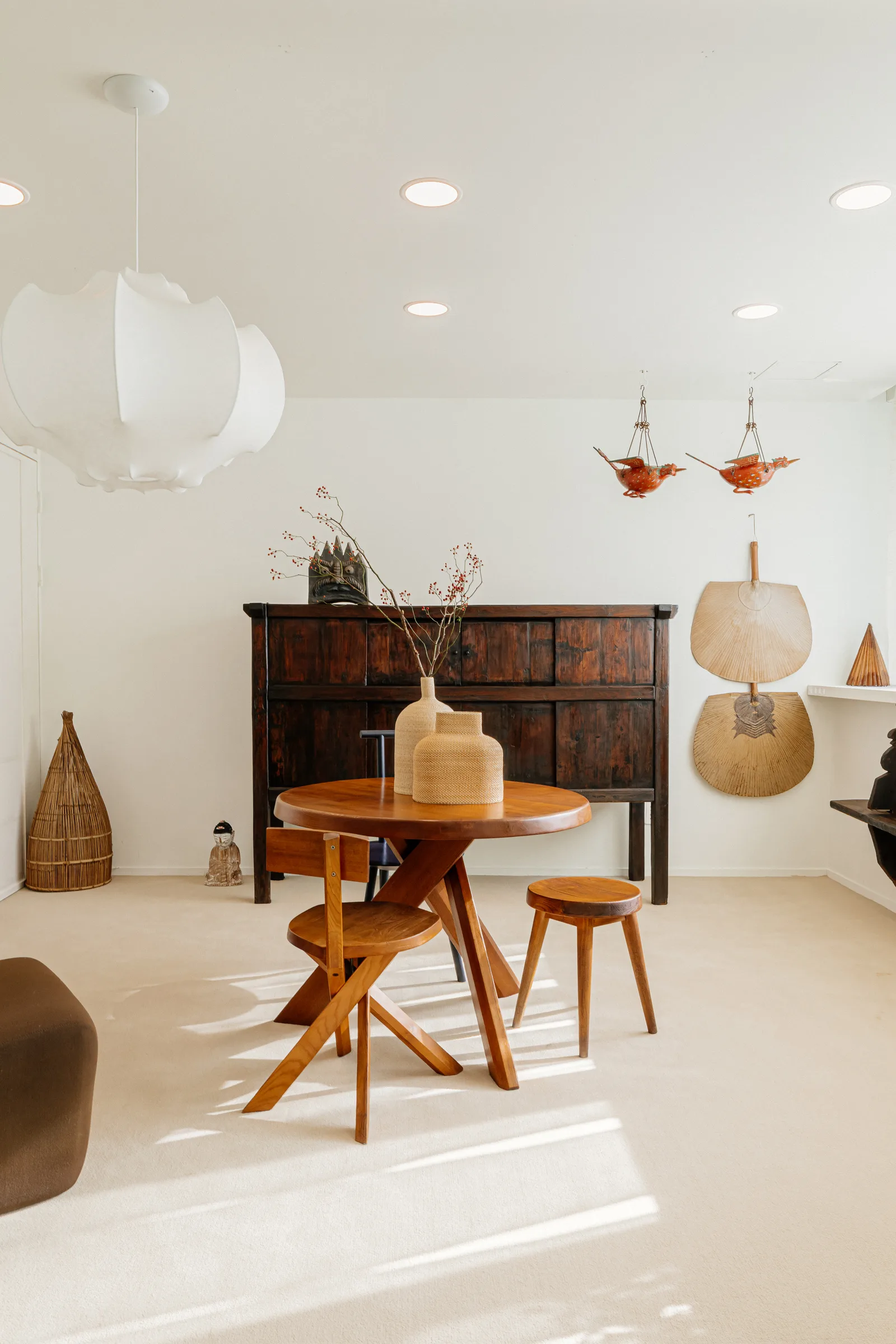
A Joseon cabinet and a mid-century table sharing one room — GOBOKII
If you think bringing in Joseon furniture obliges you to redecorate like a hanok, the burden feels heavy. The short answer: no need whatsoever. The restrained lines of Joseon woodwork look their most sophisticated precisely when set among modern and mid-century pieces. It is the same instinct by which Axel Vervoordt folds East Asian antiques into his wabi interiors, and collectors in New York and Tokyo place Richo chests beside Eames chairs. Joseon furniture was minimalist before the word existed.
Three field formulas. First, match tones — dark woods like persimmon suit a walnut-heavy home; pine and paulownia suit oak and pale woods. Second, match heights — Joseon furniture is low, so it dissolves naturally among sofas and lowboards. Third, one protagonist per room — if the bandaji has arrived, let the other furniture keep quiet. Antiques are a genre that performs better as a solo than as a choir.
6. The Art of Empty Space — Please Clear One Wall
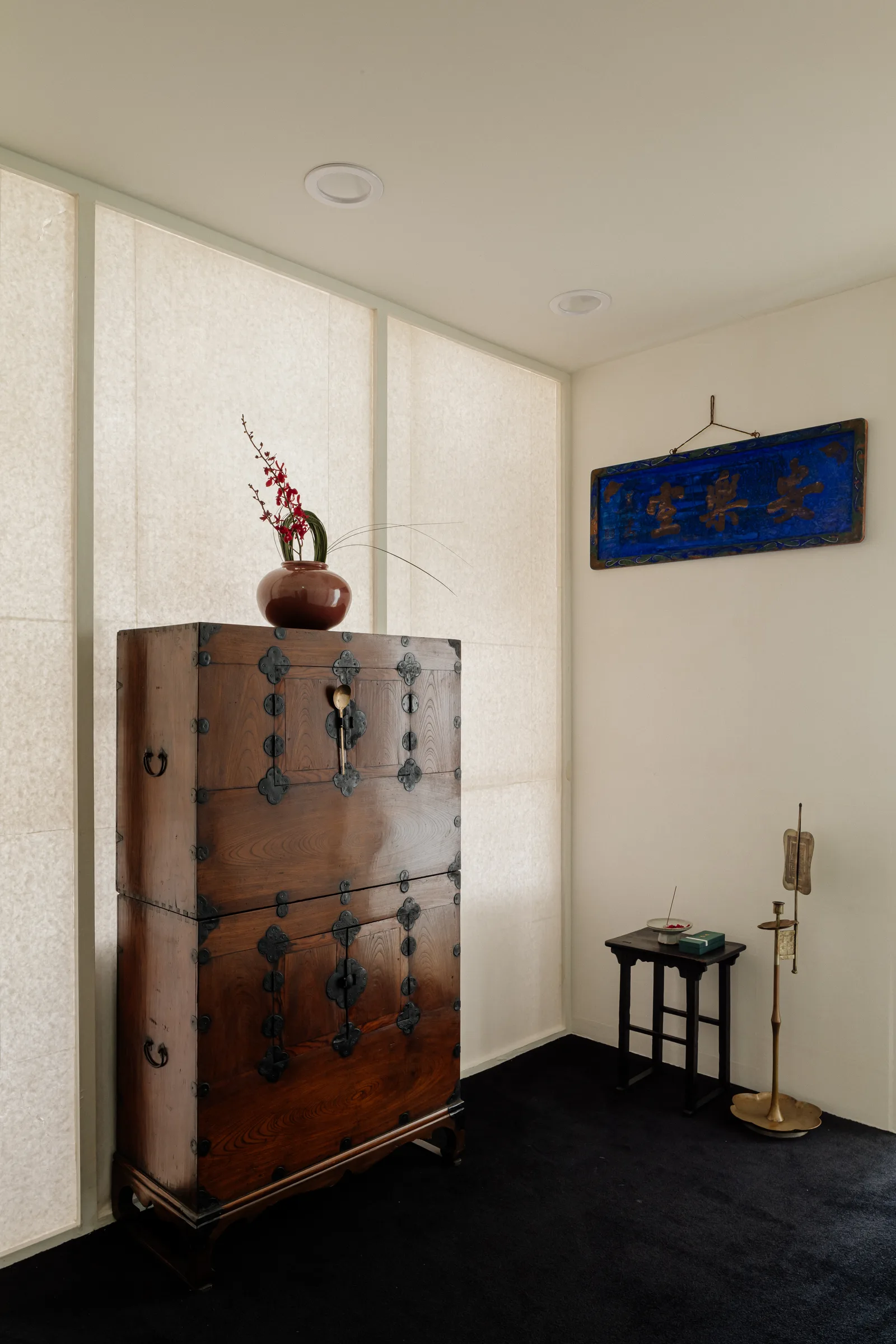
Light through hanji paper on a persimmon-wood chest — GOBOKII
The biggest mistake in placing Joseon furniture comes not from the furniture but from the backdrop. A bandaji in front of a crowded wall looks like luggage; the same bandaji in front of an empty wall looks like a work of art. So before you choose the furniture, choose a wall. Clear the frames, shelves and sundries off it, and leave one piece of furniture with one or two objects on top. The cheapest renovation available to an apartment is emptying a single wall.
Lighting owns half the shares. Under a ceiling fluorescent's direct glare, old wood looks tired. Set a low lamp beside the piece and let light rake across it at an angle: grain and iron fittings wake up, and a different face appears at night. Joseon rooms were lit by slanted light through paper windows — indirect lighting is less styling than restoration. Leave one lamp on in the evening and walk past the bandaji. You will stop more than once.
7. Apartment Climate — Drier Is Scarier Than Ondol
Joseon furniture is tougher than you fear: these are pieces that have already survived a century, so the durability test is over. The one ambush an apartment holds that a hanok never did is the extreme dryness of winter heating. Rapid drying can crack wood, so simply avoid spots where heater or air-conditioner airflow blows directly, and where midsummer sun falls for hours. A winter humidifier serves the people and the furniture alike — rarely does one appliance take care of two families.
Care is a dry cloth, or one wrung nearly dry. Commercial polishes and oils can damage the surface, so it is safer to skip them: a century-old sheen was made by hands, not wax, and the best maintenance is frequent touching and frequent use. If there is exactly one area of antique care where laziness is a virtue, it is the application of chemicals.
In Closing — No Ondol Required
Bringing Joseon furniture into an apartment is, in the end, not a question of size but of disposition. A chest born in a seven-square-meter room is unlikely to find 84 square meters cramped. Rather, from the day one bandaji or one soban moves in, time in the apartment flows a little differently: among things bought yesterday, one thing that has lived a hundred years gives the whole home a new axis — depth of time.
There is no need to start with a wardrobe-sized piece, for the same reason there is no need to move in with the whole extended family on the first day of marriage. One soban, one mungap, one bandaji — that is plenty for an apartment and Joseon to get along. And no ondol is required. What Joseon furniture needs is not underfloor heating, but someone who will keep looking at it.
Related
GOBOKII Journal
Where to Buy Korean Antiques in Seoul: A Janganpyeong & Dapsimni Walking Course
Antique Archive
A Korean-antique walking route from Janganpyeong’s Useong and Songhwa buildings to Dapsimni’s Samhui Arcade — weaving in good food and GOBOKII’s Object Shop and Atelier.
GOBOKII Journal
Where Do I Even Start? 10 Korean Antiques to Buy First
Antique Archive
From soban tables and white porcelain bottles to tiger paintings and jogakbo patchwork — GOBOKII's guide to ten Korean antiques perfect for first-time collectors, with tips on choosing well and living with them today.